
MANUFACTURING. SUPPLY CHAIN.
From Connected Operations to Intelligent Performance
Manufacturers and supply chain organisations need complete visibility across increasingly interconnected operations. We integrate information from production, inventory, suppliers and logistics to create a trusted view of performance. This enables teams to identify inefficiencies, coordinate resources and make faster decisions, improving productivity, quality and reliability throughout the value chain.
Analytics and AI help organisations anticipate demand, recognise disruption and act before performance is affected. Intelligent automation accelerates processes, improves consistency and reduces unnecessary manual intervention. By connecting data with operational action, we help build more agile, resilient and scalable businesses capable of responding quickly to changing markets, customer expectations and supply conditions.
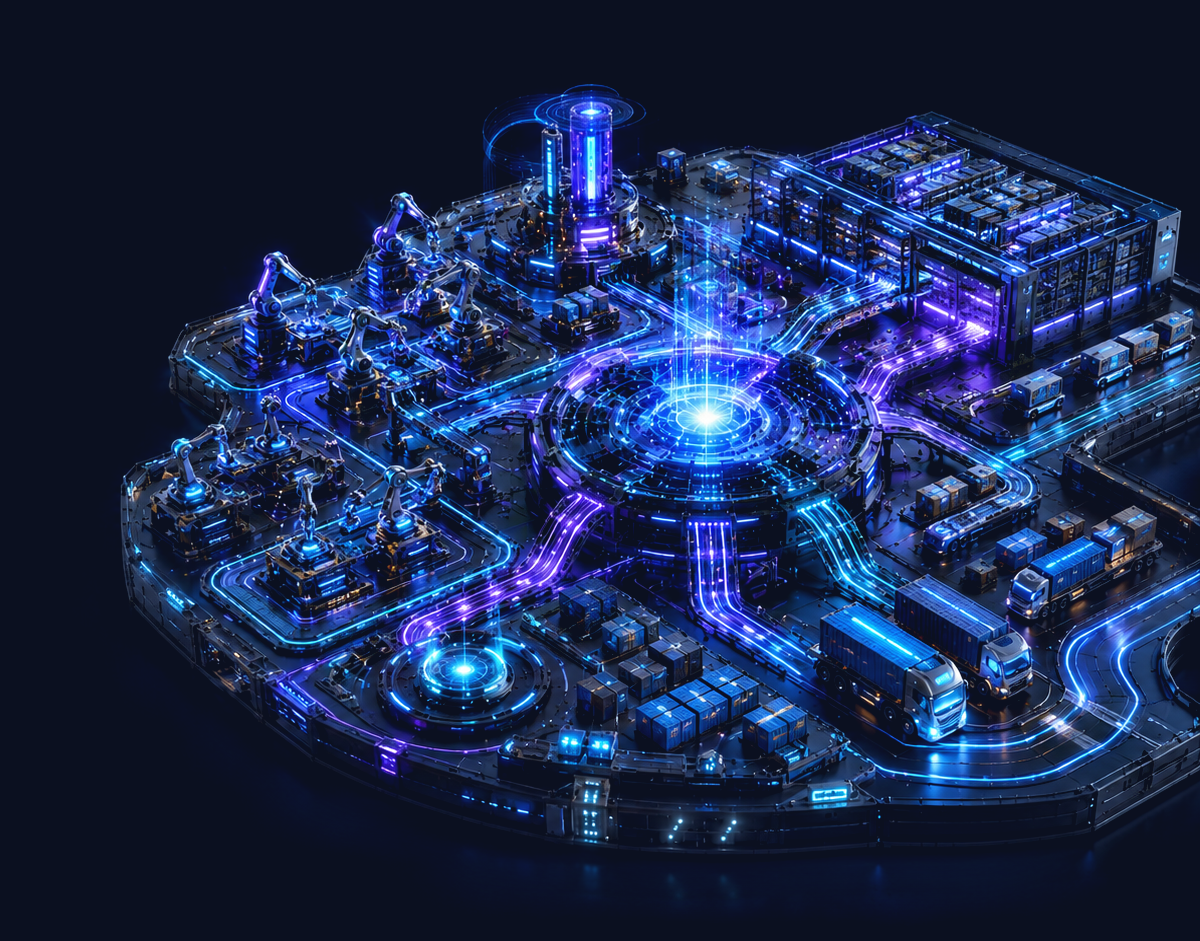
DATA-DRIVEN. DECISIONS.
The Decisions Data Should Improve
Manufacturing and supply-chain performance depends on thousands of interconnected decisions across demand, production, inventory, suppliers and logistics. Connected data provides the visibility needed to coordinate these decisions, anticipate disruption and continuously improve quality, productivity and reliability.

Growth and Commercial Performance
Combine demand, customer, product and profitability data to identify attractive markets, evaluate product performance and align production with commercial opportunity. Better forecasting helps balance growth ambitions with available capacity.

Customer Experience
Provide customers and partners with more accurate information about availability, orders, quality and delivery. Shared visibility improves coordination, strengthens trust and enables faster responses when requirements change.
Operational Excellence
Monitor equipment, production, inventory and supply-chain performance in real time. Predictive maintenance, quality analytics and intelligent planning reduce downtime, waste and unnecessary cost while improving throughput.
Risk, Compliance and Resilience
Identify supplier dependencies, quality issues, equipment risks and potential disruption before they affect delivery. Traceable data and continuous monitoring strengthen compliance, operational continuity and supply-chain resilience.
KPI. SIGNAL. MONITOR.
The Signals That Matter
Manufacturing performance depends on the relationship between equipment, production, quality, inventory and delivery. Connected KPIs help organisations detect losses, understand constraints and improve the reliability and productivity of the entire value chain.
Overall Equipment Effectiveness
OEE combines availability, performance and quality to show how effectively production equipment is being used. It provides a shared indicator for identifying the largest sources of lost productive capacity.
Unplanned Downtime
Measures production time lost through unexpected equipment or process failures. Analysing downtime frequency, duration and root causes helps improve maintenance and protect production schedules.
First-Pass Yield
Shows the proportion of products completed correctly without rework or additional processing. A higher first-pass yield indicates greater process stability, quality and production efficiency.
Scrap and Defect Rate
Measures the proportion of materials or products that fail to meet required standards. Monitoring patterns by line, product and supplier helps reduce waste, protect margins and improve quality.
On-Time, In-Full Delivery
Tracks whether customer orders are delivered at the agreed time and in the correct quantity. It reflects the combined performance of production, inventory, suppliers and logistics.
Inventory Turnover
Measures how frequently inventory is sold or consumed and replaced. It helps organisations balance product availability with working capital, storage cost and the risk of obsolete stock.
AI. ACTION. IMPACT.
Where AI Creates Impact
AI connects signals from machines, production, inventory, suppliers and demand to create more adaptive industrial operations. It can help manufacturers prevent disruption, improve quality and coordinate complex supply chains—turning operational data into measurable improvements in productivity, cost and reliability.
Predict Equipment Failure and Demand
AI can forecast maintenance requirements, product demand and potential supply constraints using sensor, order and historical performance data. Earlier visibility enables better production and inventory planning while reducing unexpected downtime, shortages and expensive emergency interventions.
Detect Defects and Process Anomalies
Computer vision and machine learning can inspect products and monitor production signals continuously. Detecting defects and process deviations earlier allows manufacturers to contain quality issues, reduce scrap and rework and maintain more consistent production standards.
Optimise Production, Inventory and Supply
AI can evaluate schedules, capacity, materials, suppliers, energy use and delivery commitments simultaneously. This enables more responsive production plans, improved inventory levels and better use of resources—supporting higher throughput, lower costs and stronger delivery performance.
Automate and Assist Frontline Operations
Intelligent assistants can provide maintenance guidance, retrieve technical knowledge, prepare work orders and help teams resolve operational exceptions. This reduces administrative effort, accelerates problem-solving and makes valuable organisational knowledge available across shifts, sites and experience levels.